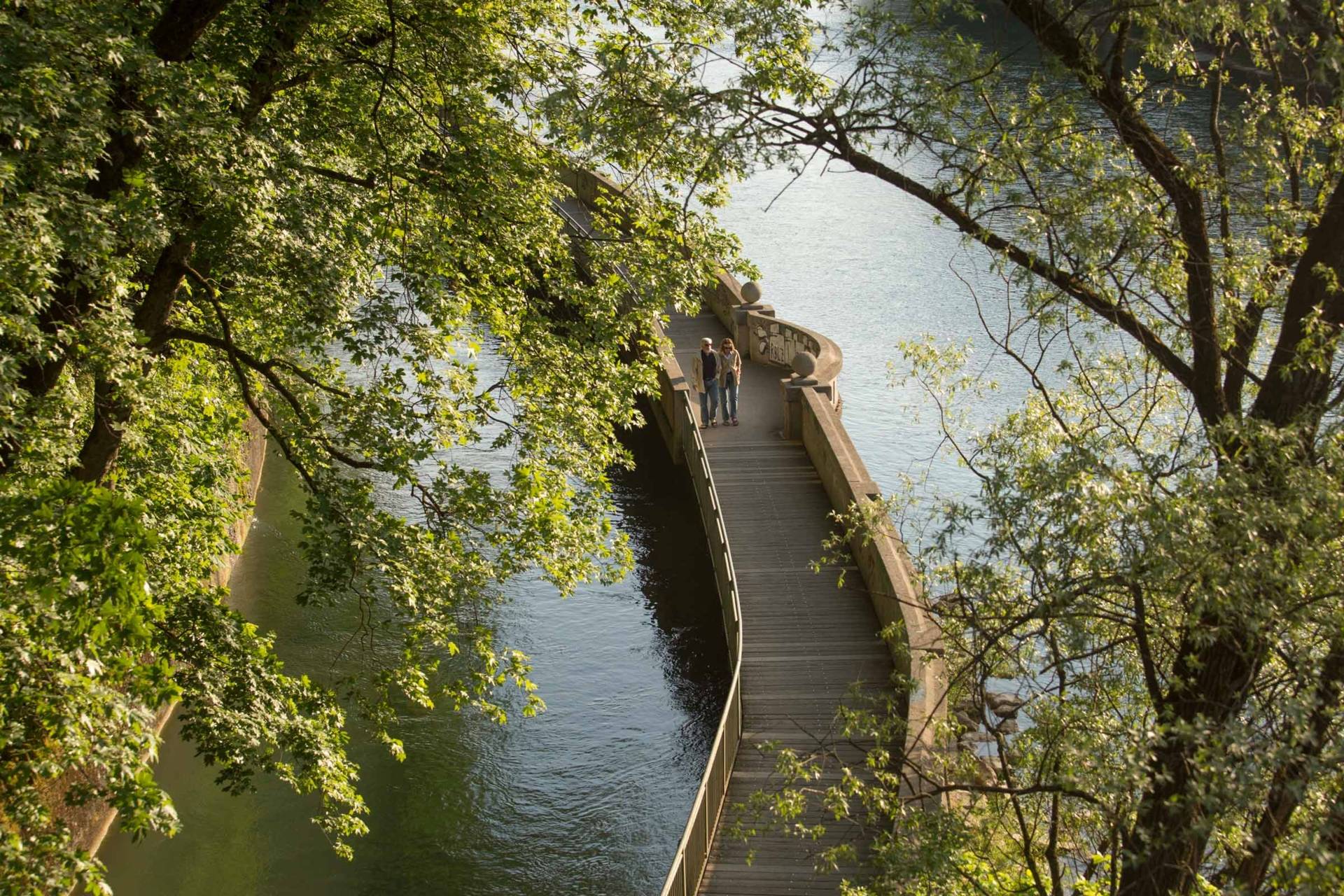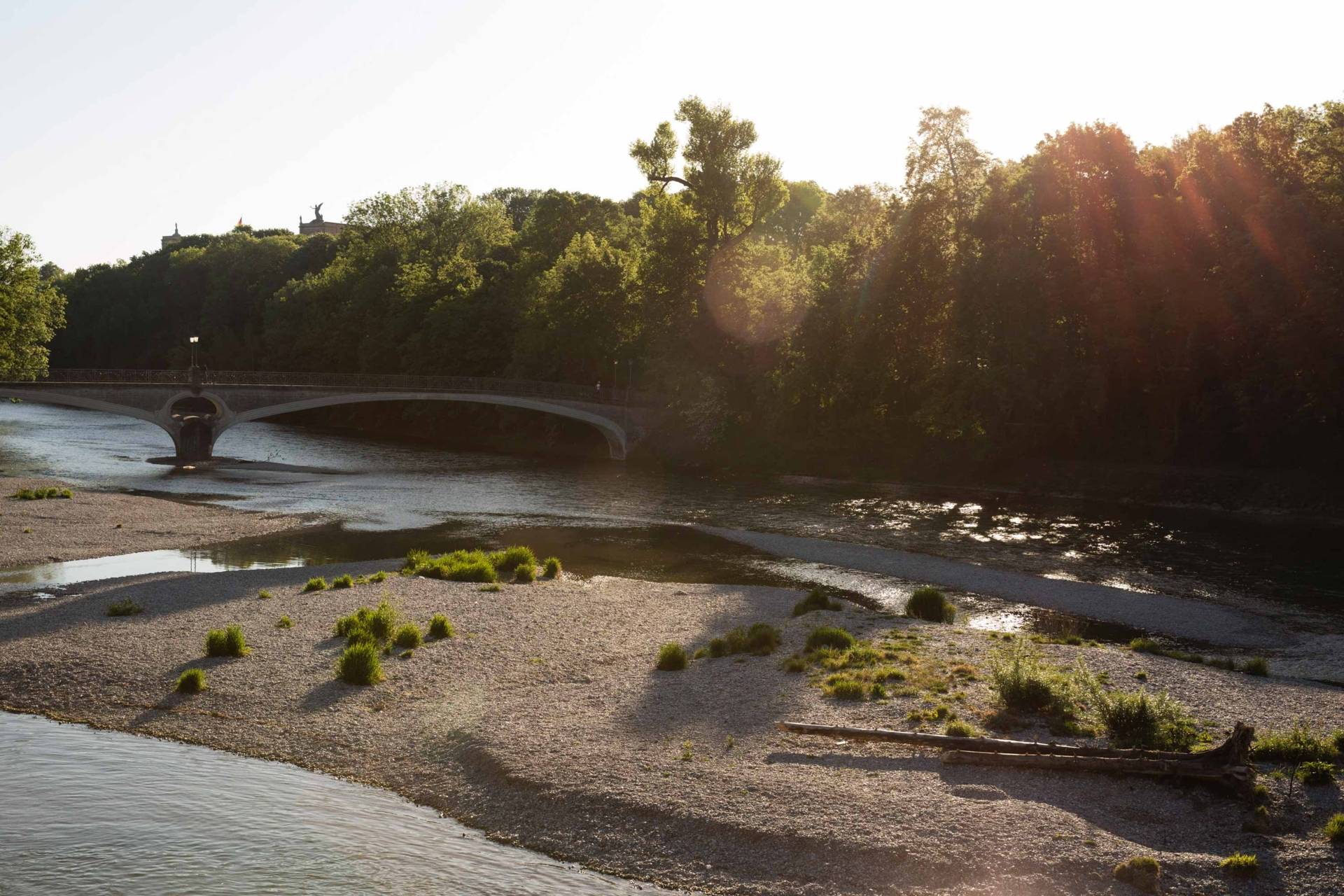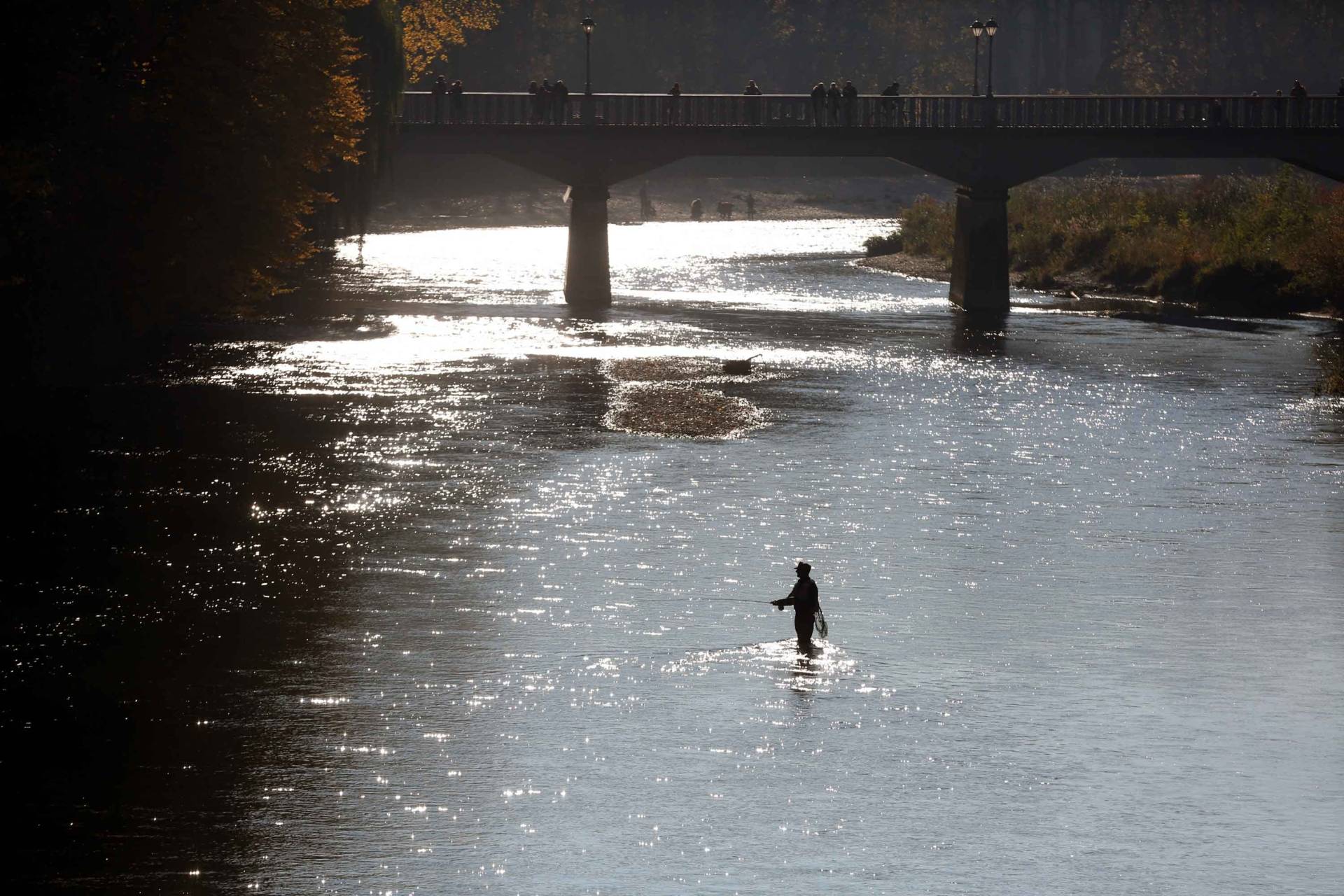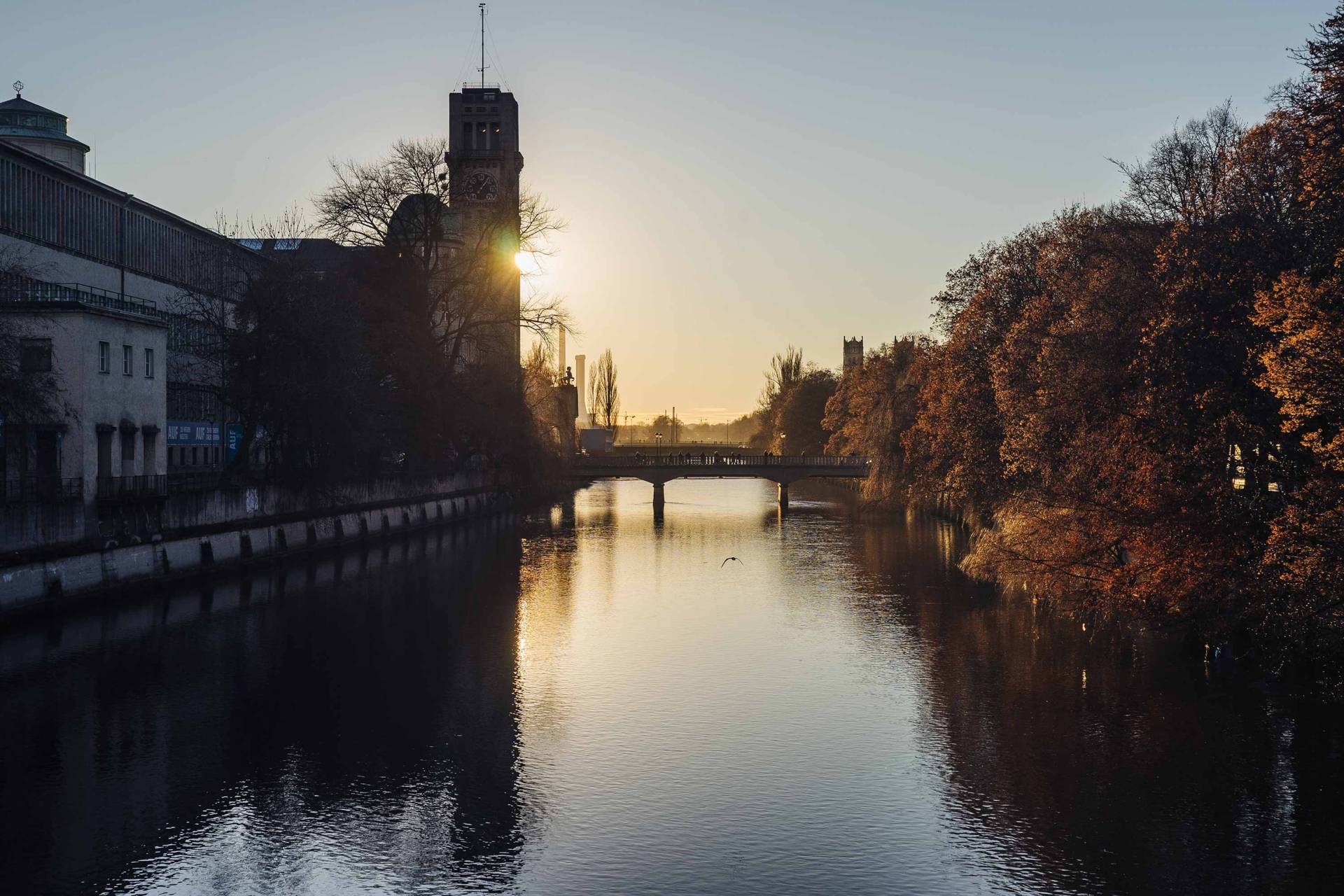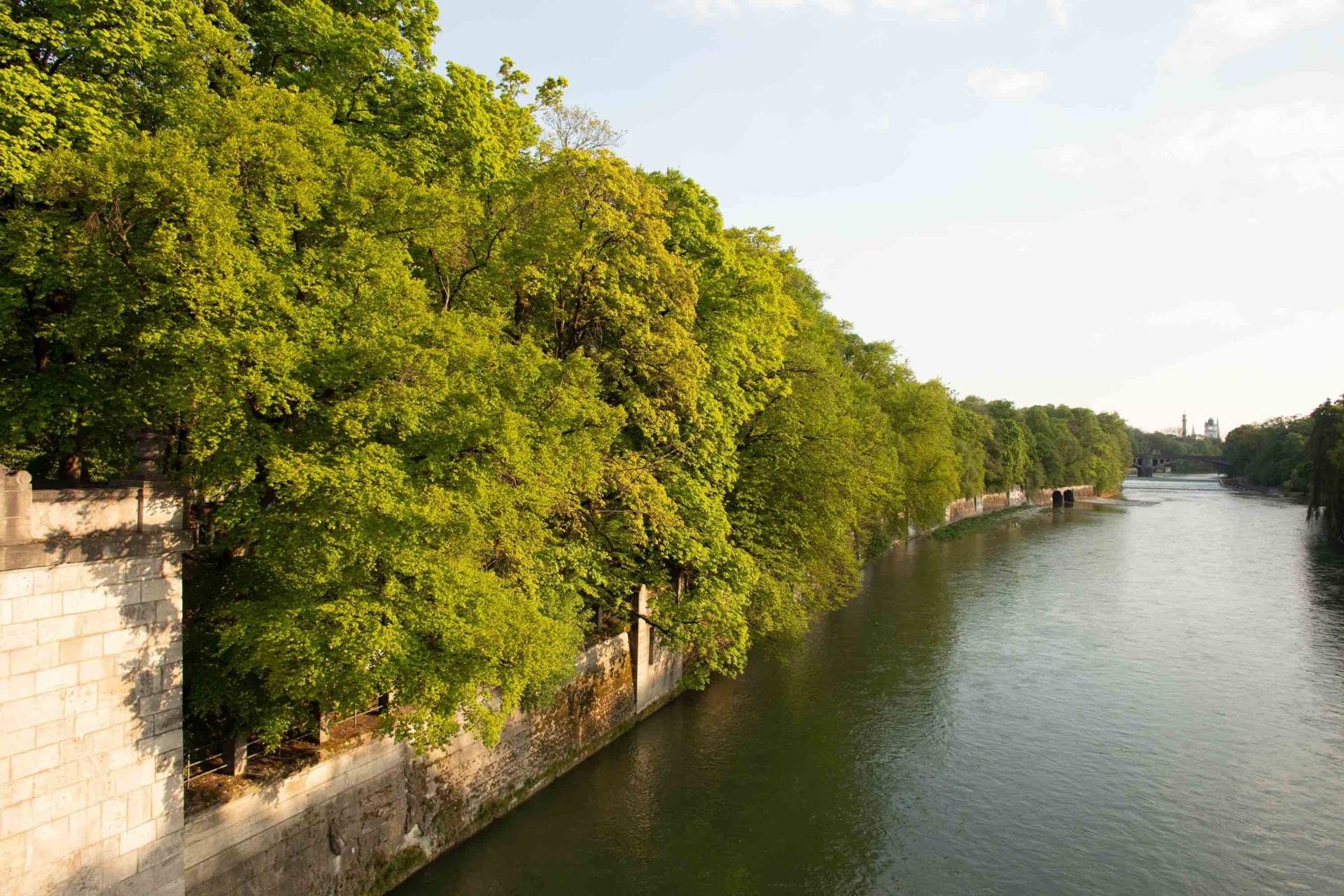
The more than one thousand bridges and footbridges in Munich connect different parts of the city, people and stories. They are not only the way from one side of the Isar to the other, but also show the diversity of the big city.
It is one of Munich's best-known bridges: the Reichenbachbrücke connects the popular Glockenbachviertel (quarter) with the peaceful Au (quarter). Up to the 20th century, the daily routine was still dominated by a lively farm business - pigs and fish were bred, and their milk sold. The life blood, the Auer Mühlbach (stream), remains. And the Au still retains much of its village-like charm today.
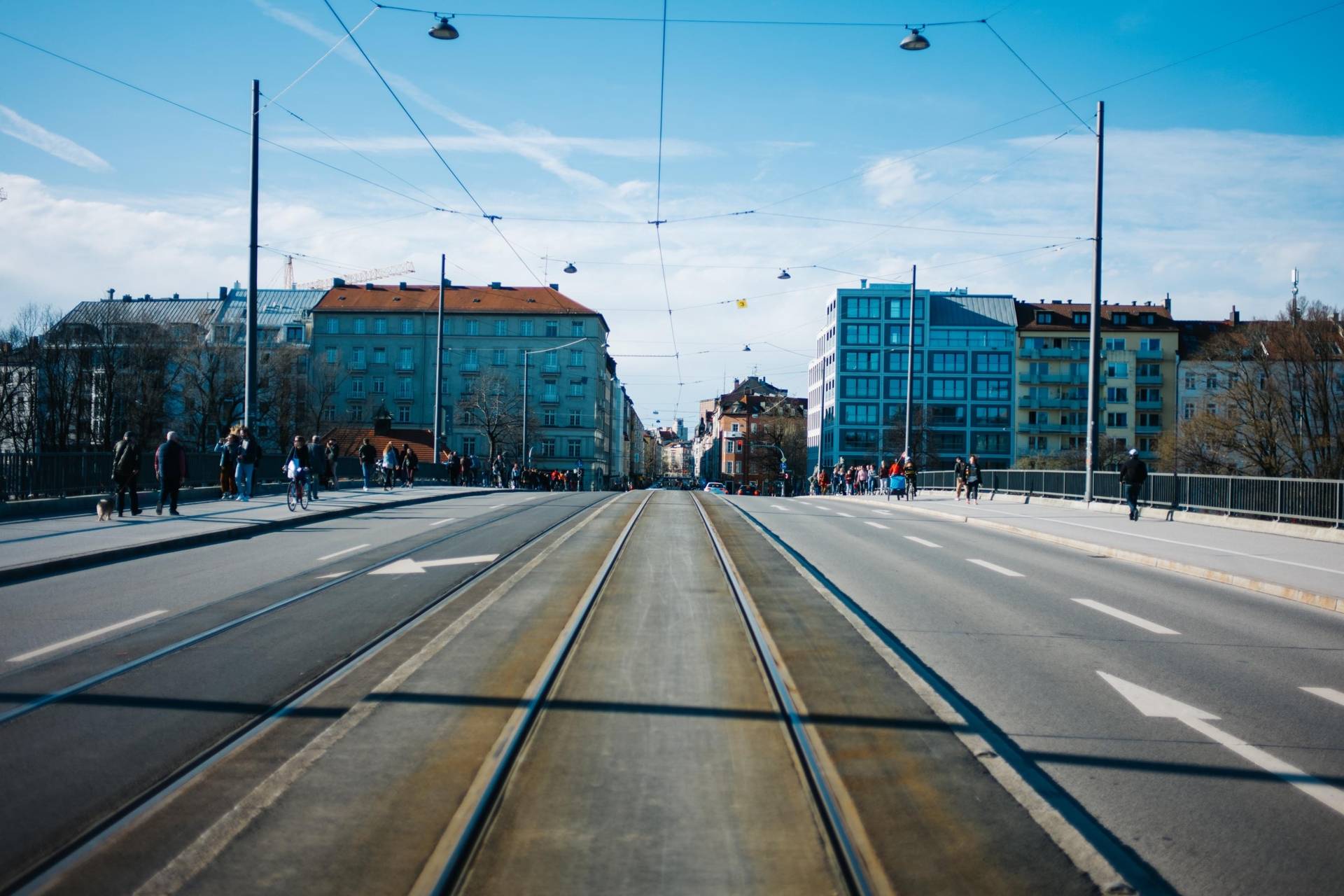
On the other side of the river conversely, the Glockenbachviertel is very metropolitan. They always busy Reichenbachkiosk welcomes its visitors to the quarter. It is one of the few kiosks in Munich that's open virtually round the clock And there's always something happening in the quarter: bars sit alongside cafés, restaurants and clubs. The Müllerstrasse in particular has been party-central for decades – including for the LGBTIQ-Szene. While the Au tends to be home to traditional inns, the Glockenbachviertel also caters to the latest culinary demands – from Vietnamese tapas to an acai bowl.
The Donnersbergerbrücke is Munich's gateway to the world, connecting the city to the outside. So in theory, you can travel from Munich's central bridge straight to the Brandenburg Gate.
The Munich musician Willy Astor has dedicated a love song to the Donnersbergerbrücke (bridge). He sings its praises as probably the ugliest bridge in the city – but also one of the most important. The Donnersbergerbrücke not only has its own railway station, every train heading for Hauptbahnhof or out into the world passes through here. That's an estimated 450,000 people every day, because the Hauptbahnhof is one of Germany's biggest passenger stations.
The Mittlere Ring (central ring road) also passes over the Donnersbergerbrücke, unfortunately making this main road one of the most congested in Germany. It leads to the B2 motorways, which links Garmisch with Berlin. So in theory, you can travel from Munich's central bridge straight to the Brandenburg Gate. The Donnersbergerbrücke is Munich's gateway to the world, connecting the city to the outside. And you don't need to win a beauty parade for that.
The wide and impressive Luitpoldbrücke (bridge) connects Munich's Prinzregentenstrasse with the Friedensengel (Angel of Peace monument) which enthrones Munich. This is a street packed with history – it was built by Prince Regent Luitpold in 1891, with buildings such as the Haus der Kunst (art gallery) being added during the Nazi period. The world-famous Club P1 also has more of a historic past than you might expect: it opened back in the 50s as an officers' club for the American occupying forces.
While one side of the Luitpoldbrücke was largely marked by the war, the Friedensengel shines out on the other. In the truest sense, because the golden angel, at almost 40 metres high, can be seen from afar – and gives the people of Munich a peaceful feeling of being 'home'. The monument has stood here since 1896, and is intended to commemorate the anniversary of the peace accord after the end of the Franco-Prussian war.
Friendships are formed here in September especially. Because from the bridge, you can walk together to the Oktoberfest – losing their friends and immediately finding new ones.
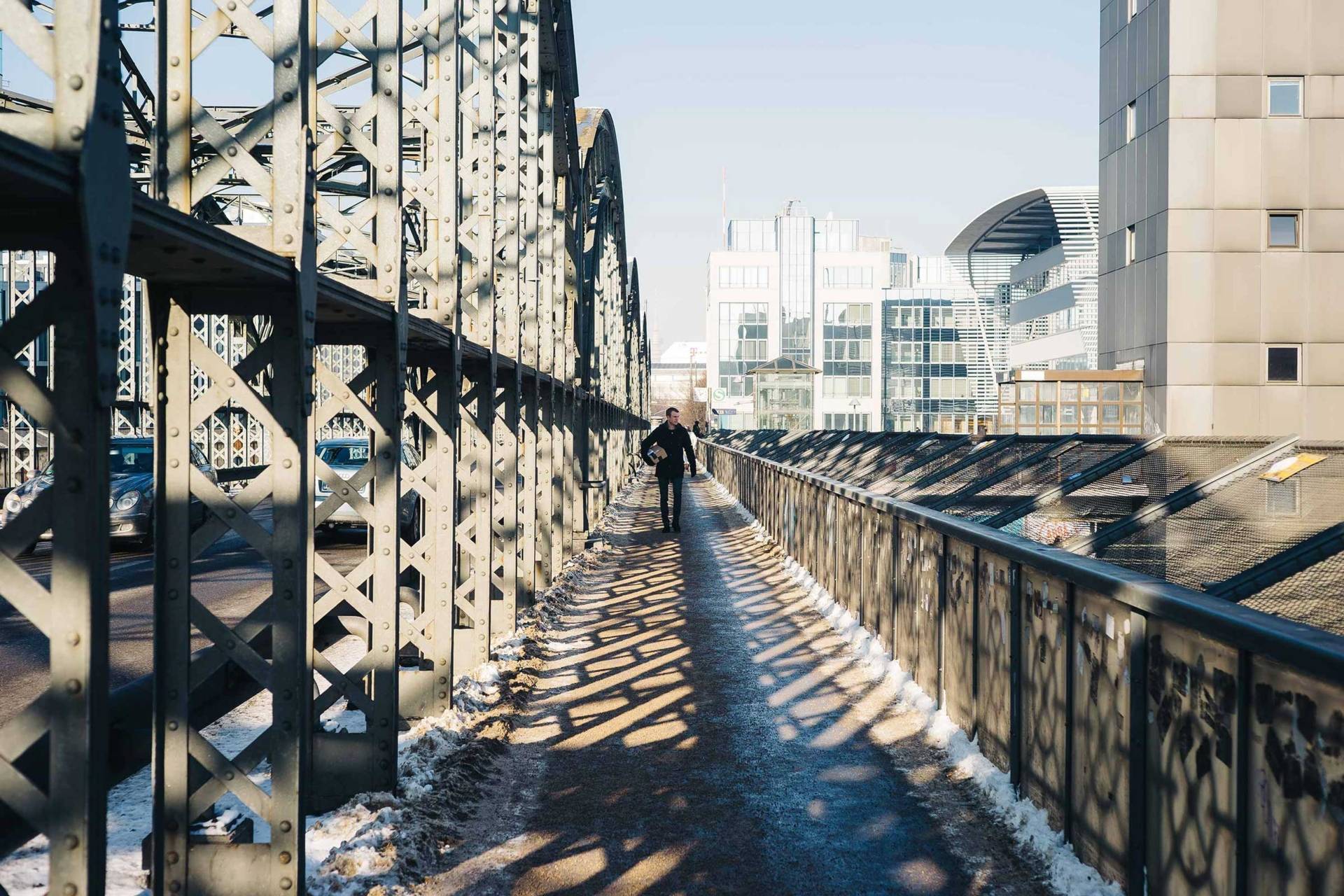
The Hackebrücke (bridge) is the much-loves little sister of the Donnersbergerbrücke. In the summer, people sit together on the bridge railing and enjoy the sunset. Because like the Gärtnerplatz (square), the Hackerbrücke is a popular meeting point for an after-work beer. Friendships are formed here in September especially. Because from the bridge, you can walk together to the Oktoberfest – losing their friends and immediately finding new ones.
It can't be any coincidence that the bridge also sees a lot of international activity: that's because the bridge also connects Munich's Central Station quarter and the Westend (quarter). This quarter of the city was once a slum area – and although it's become quite gentrified these days, it's still home to small boazn (basic bars) and Turkish snack bars. The Westend also has the second-highest proportion of foreigners of all Munich's quarters. The Hackerbrücke brings people together and keeps Munich colourful!
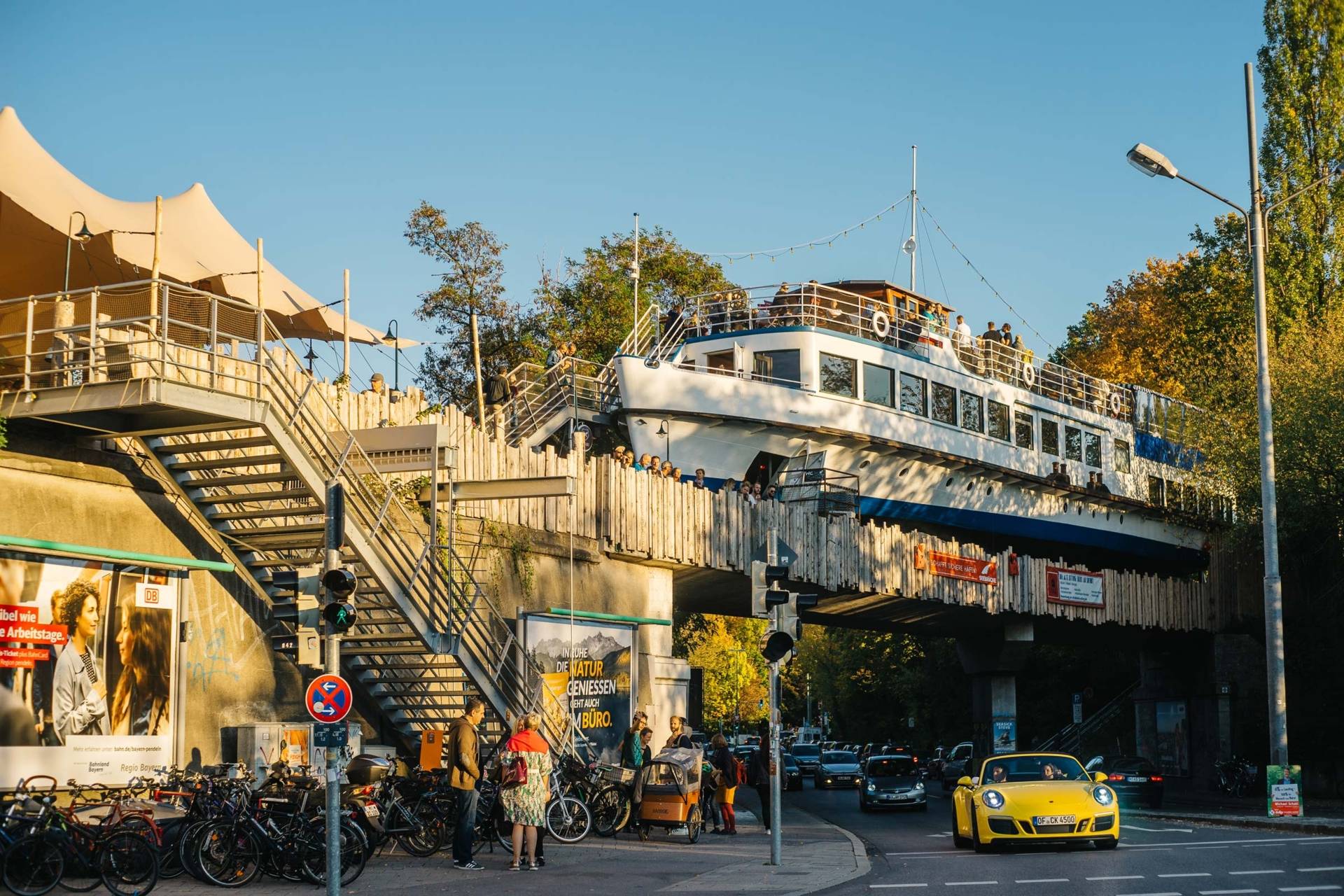
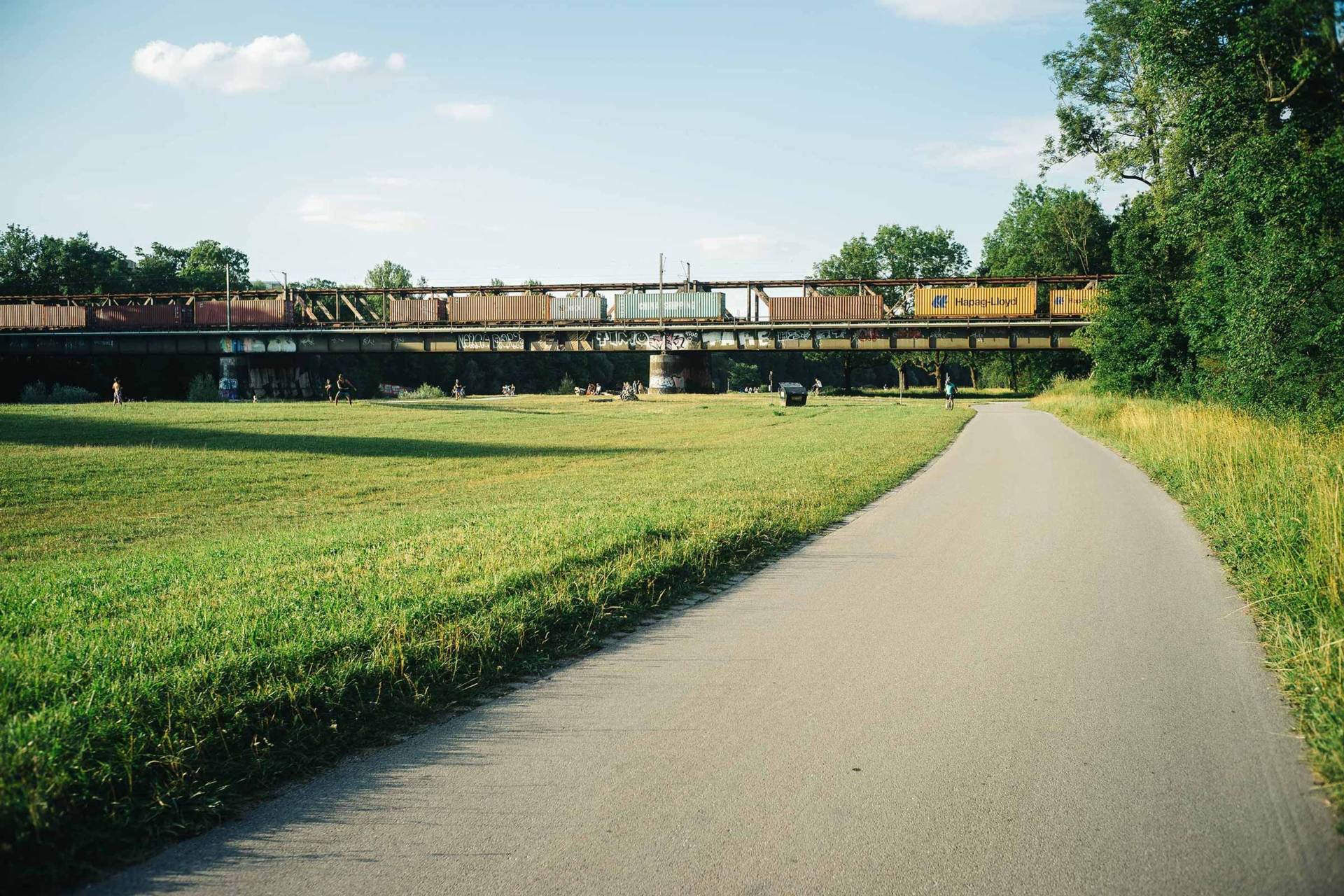
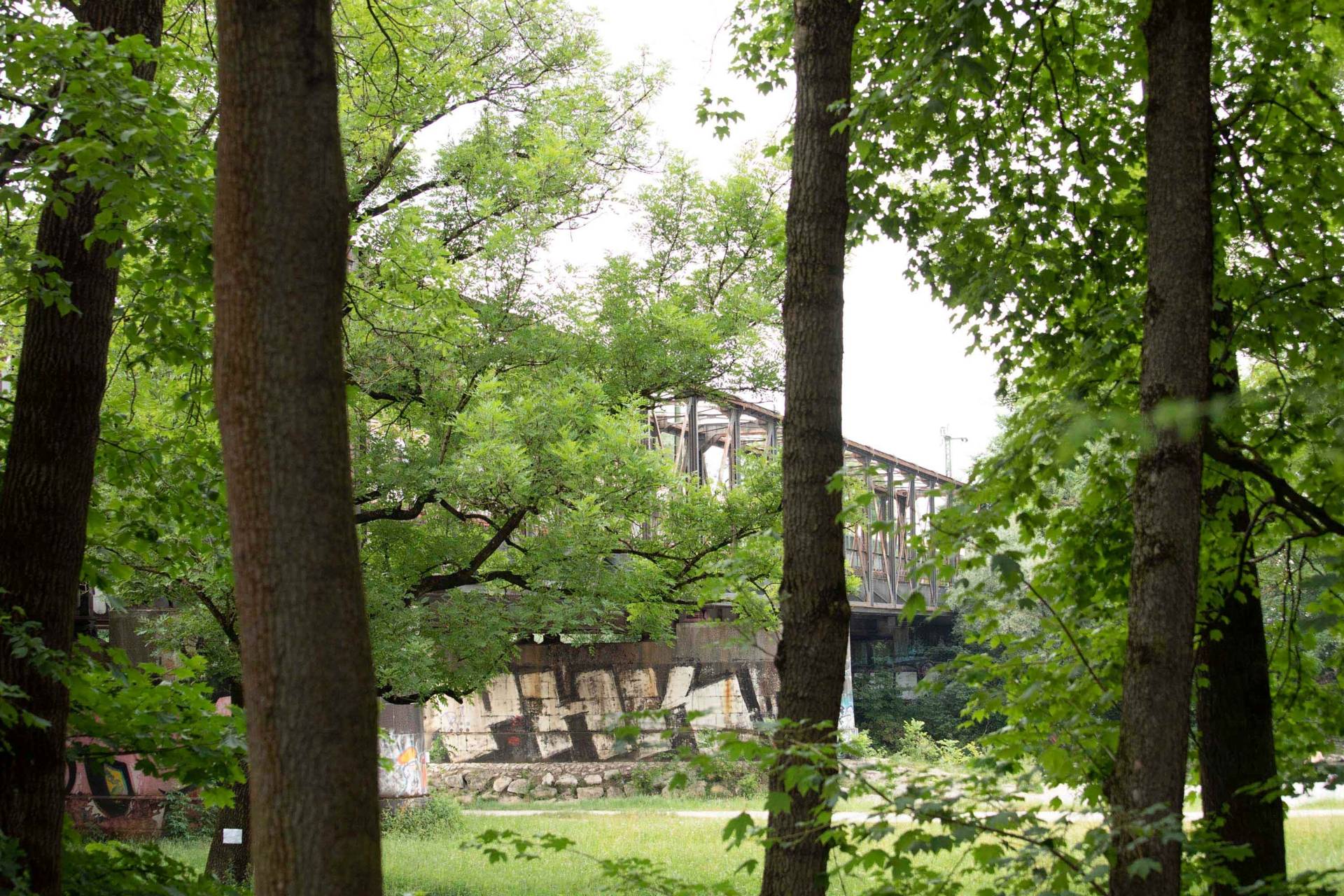
It's actually the star among Munich's bridges – yet no one knows its name The Eisenbahnbrücke in the Schlachthofviertel (quarter), which crosses the Lagerhausstrasse, most recently rose to fame thanks to an article in the New York Times. The article reported on the Alte Utting, a decommissioned pleasure steamer that now sits on the small bridge, drawing in visitors as a café, bar and cultural site. The whole thing is a project by the Hahn brothers, already well-known in Munich for similar subculture such as the Bahnwärter Thiel (culture centre) and the Café Gans am Wasser.
But here's something not many people know: the bridge that today symbolises Munich's coolness used to supply the city with food. All trains from neighbouring countries took this route into the city - the tracks led straight to the site of the Grossmarkthalle (wholesale market hall). But as goods increasingly arrived by plane or truck, the bridge lost its role. Fortunately, it's found a new one today: from here, you can enjoy what is probably the most beautiful sunset in the city.
On one side is the world's first geozoo, on the other side of the Isar, kayaking enthusiasts paddle along the Isarwehrkanal, at the Maria Einsiedel natural swimming pool you can dive into chlorine-free pools, and the raft landing stage invites you to go surfing.
The Thalkirchner Brücke (bridge) is very busy in the summer in particular: families stroll to the zoo, youngsters carry barbecues under their arm to the Flaucher (pebble beach) and it draws sports enthusiasts on their bikes further south of the Isar (river). The bridge at the Tierpark Hellabrunn (zoo) is, so to speak, a hub for everyone seeking relaxation – and and connects the most beautiful aspects of nature.
On one side is the world's first geo-zoo with around 18,500 animals, it's not uncommon to sit by the Isar and hear a lion roaring or a monkey shouting. On the other side of the Isar, Munich's nature programme plays: passionate kayakers paddle along the Isarwehrkanal (canal), you can dive in at the Naturbad Maria Einsiedel (ecological outdoor swimming pool) and the Flosslände (raft launch) is the perfect place for bathing, surfing and camping. It is even the world's oldest river wave for surfers! The Thalkirchner Brücke must be the greenest place in Munich.
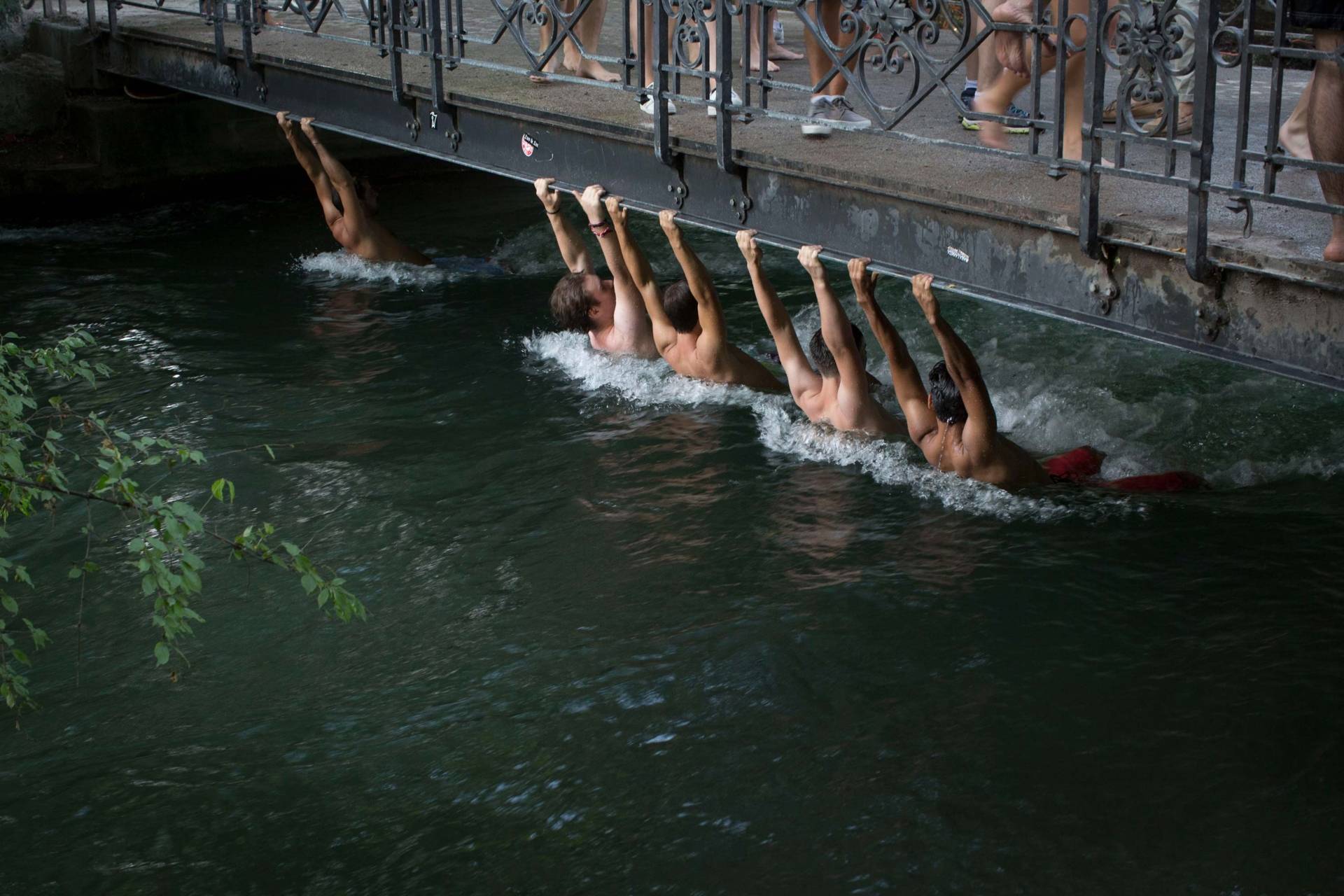
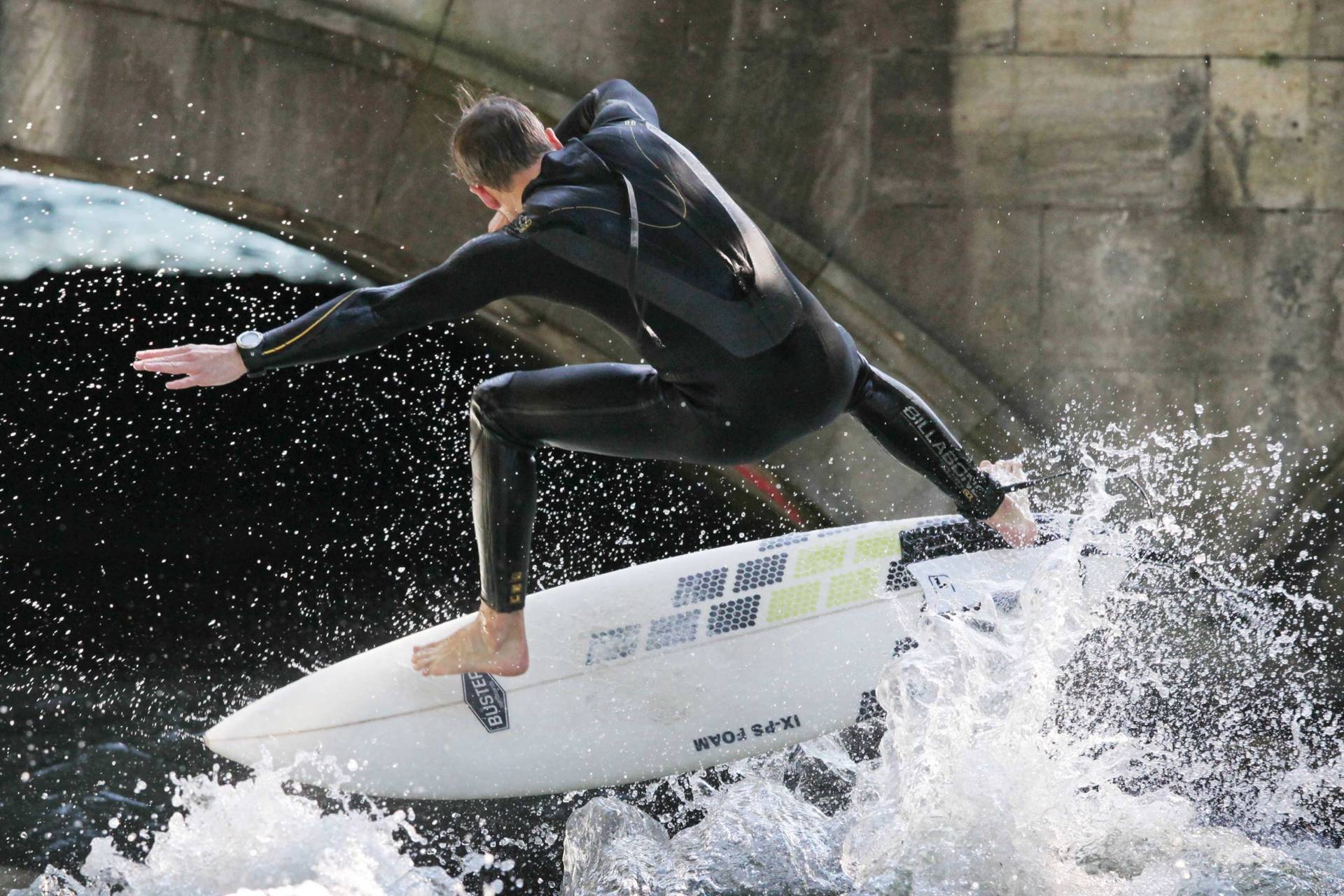
Two of the city's streams meet beneath the Eisbachbrücke (bridge) – and from them emerges what is probably Germany's most famous wave: the Eisbachwelle. The wave is ridden at all hours of the day. Sometimes even by professionals from all over the world. For once, the Eisbach Bridge does not connect districts or different places, but people. Because throughout the day, it's packed with tourists watching the surfers. The bridge has become a tourist attraction, and is now just as famous as the Frauenkirche (cathedral) or the Rathaus (Town Hall).
The Eisbach Bridge does not connect neighbourhoods, but people. This is because there are almost always crowds of onlookers standing on the bridge watching the surfers.
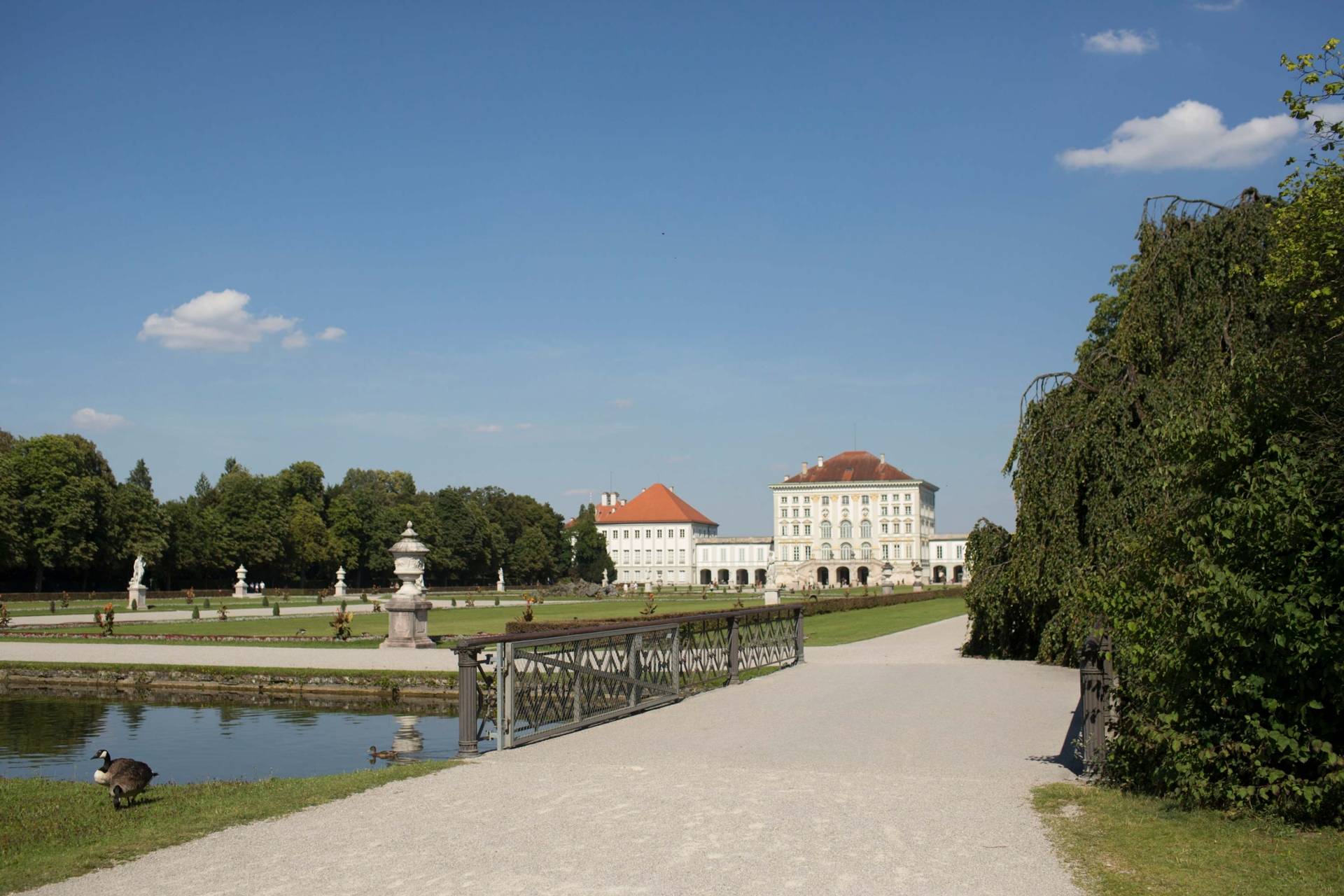
Perhaps one of the most romantic bridges in the small Gerner Brücke which spans the Nymphenburger Kanal (Nymphenburg Canal), and is therefore also known as a canal bridge. Not only does it connect two important city quarters – Gern and Neuhausen – it also connects two wonderful vistas. Look to the west for a perfect view of Nymphenburger Schloss (Nymphenburg Palace), or to the east for the no less beautiful Hubertusbrunnen (fountain). The Gerner Brücke is a listed monument and was closed to cars a few years ago. When travelling on foot, you have a great view in all directions.
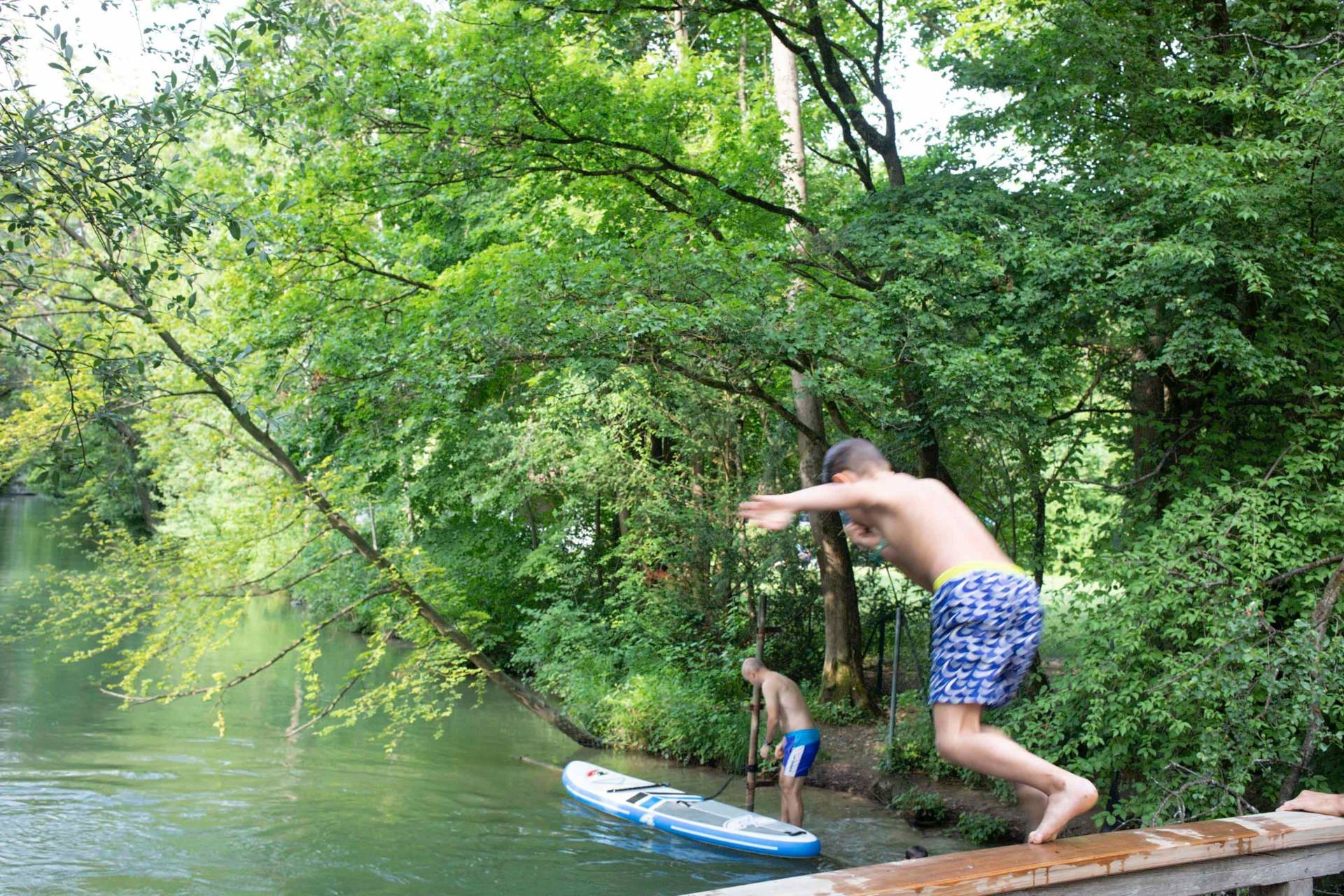
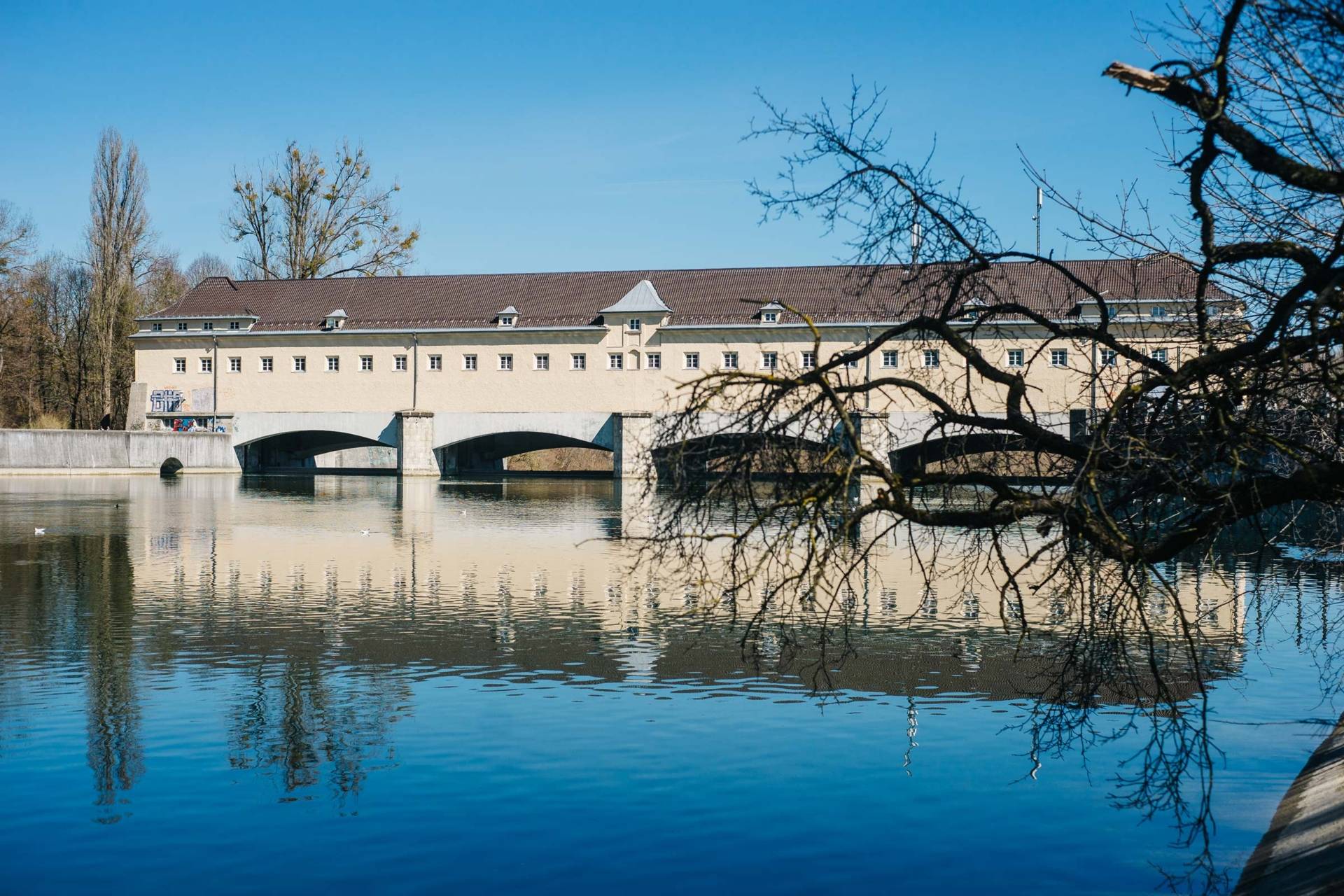
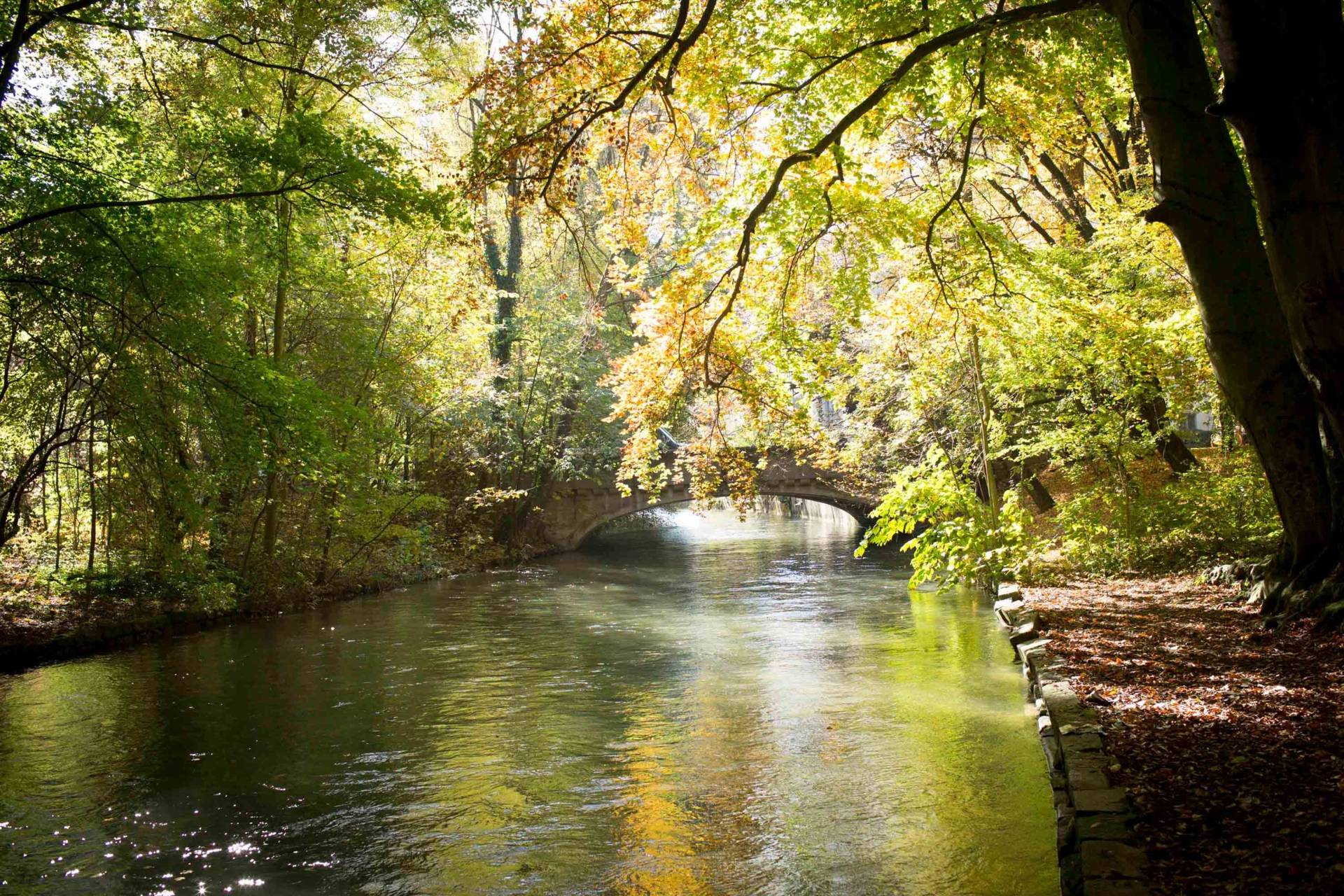
The St. Emmeran Brücke in the north of Munich is a very unusual bridge. One of the few half-timbered bridges in the city connects the Englischer Garten with the Isarinsel (Isar Island) in an idyllic atmosphere far away from the noise of the city. For many Munich residents and visitors, the famous park ends with the Mittlerer Ring. It's a shame, because beyond this road, the Englischer Garten extends much further into the peaceful northern section. This is also where you will find the Stauwehr Oberföhring (dam) which divides the Isar into two arms – and so allows the 'Mittlere Isar Canal' to spring up. This results in a large, green island in the middle of the Isar – which is easily reached via the St. Emmeran Brücke.